TRIMURTI

tirthayatra BLOG
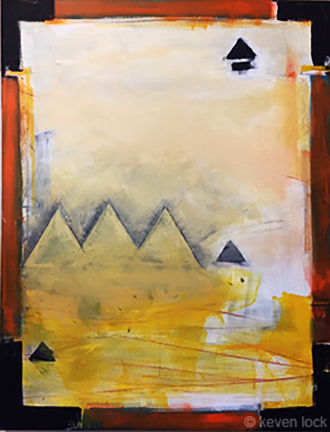
TIRTHAYATRA – Mixed Media on Illustration Board – ©2020 keven lock

The Sanskrit word “Trimurti”   त्रिमूर्ति   translates into English as “three forms”.  In Smarti Hinduism, Trimurti is understood to refer to the supreme triple forms of Brahman which  are Brahma, Vishnu, and Shiva.
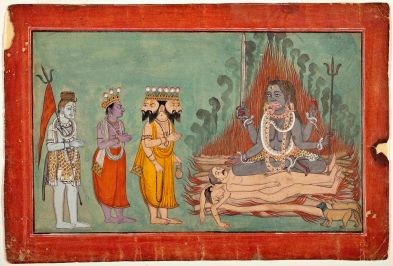
1600px-Shiva,_Vishnu,_and_Brahma_Adoring_Kali,_ca._1740,_Basohli,LACMA
Shiva, Vishnu, and Brahma adoring Kali
Anonymous/Unknown author – Public domain

These three aspects of Brahman are understood to manifest the creation, preservation, and destruction of the universe.
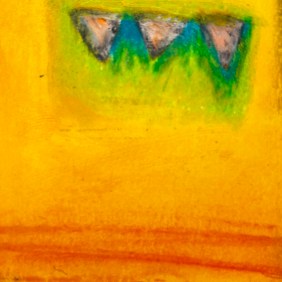
MANIFESTATION - SACRED RIVER
MANIFESTATION/SACRED RIVER
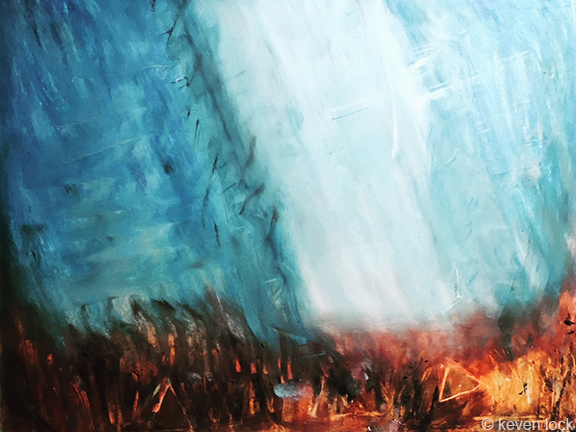
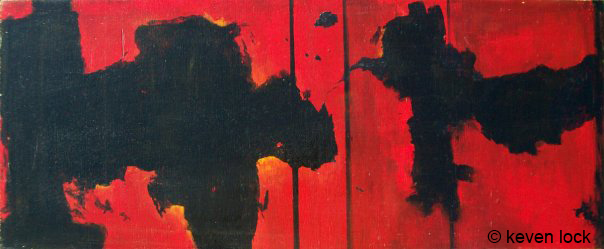
Mixed Media on Paper – ©2019 keven lock

Hindu Shaivites venerate Shiva as supreme and hold the view that Shiva manifests all of the actions of creation, preservation, and destruction.
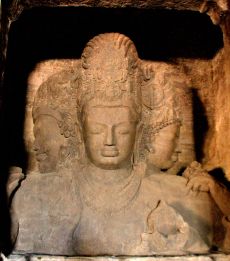
1054px-Elephanta_Caves_Trimurti
Sadashiva
Christian Haugen https://creativecommons.org/licenses/by/2.0

I have found contemplating Vedic concepts of the Trimurti to be rich with inspiration for my own art making.

In his excellent book, American Veda, Author Phillip Goldberg writes that India’s visual arts  have been a minor influence on Western contemporary art as opposed to the huge influence Indian music has had on the Western scene.

Mr Goldberg further reports that Art Historian Debashish Banerji maintains that “it is because Indian painting has mainly been representational” unlike “Western trends toward abstraction and minimalism”.

My own research has shown me that this is quite true. Nonetheless, I’ve been hugely inspired by my Vedantic practice and also by abstract Tantric paintings from Rajasthan. 

“An Egoless Practice”: Tantric Art

On my own path of art making I strive to discover and present imagery in a manner that emulates the oft quoted sentiment of jazz great John Coltrane: “I’d like to point out to people the divine in a musical language that transcends words.”

Screen Shot 2020-02-05 at 10.48.01 PM
OBLATION – Mixed Media on Paper – ©2020 keven lock

Thanks for looking in!
Kev
 

Knock, Knock…

Knock Knock Image 1

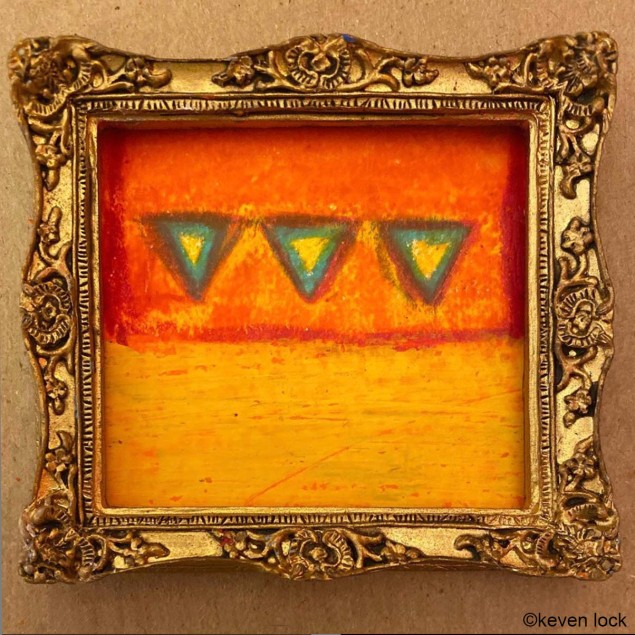
I’ve been gone for one year, four months and about 10 days. Anybody notice?  I’ve been away drawing triangles.  And doing some other stuff.  Went to Santa Fe (Meow Wolf!). And Monterey. Dropped a ball in Times Square. And I built a Time Machine. That is to say ANOTHER Time Machine…  Maybe more on that later.

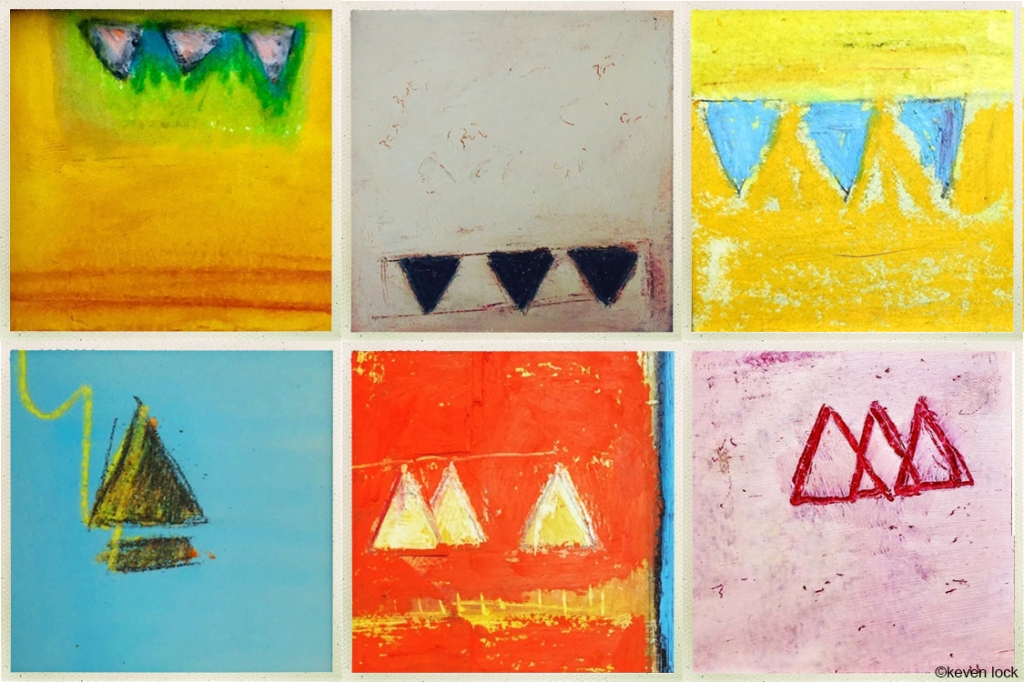
Triangles Composit

But to the point, I’ve been drawing triangles in my practice. It’s what I was blogging about over a year ago. Art as Practice.

I realized that I wasn’t practicing so much as I was writing about practice, so I quit blogging and started to practice  more in earnest. It paid off. I’ve got a lot of new art and a habit that I practice.

Who’s there???

I'm Back

Thanks for looking back in!!!

Kev

TRIANGLES: A LOVE STORY

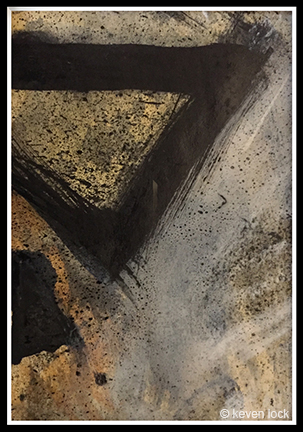
PORTAL - Sumi Triangle
PORTAL – SUMI INK & WATERCOLOR ON PAPER – 6″ x  4″

The mandala/coloring book craze hit right around the time I was contemplating moving my art making to the center of my spiritual practice, so I gave it a look. The coloring was relaxing, and reengaging with crayons was excellent, but the mandalas I encountered were mostly generic designs that I didn’t connect to.

My previous interest in mandalas was sparked by having been privileged to observe a team of Tibetan monks create a sand mandala at the Virginia Museum of Fine Arts where I was in residence  in the early ’90s. So, still intrigued after having checked out the coloring books,  I started looking at, among other things, yantras.

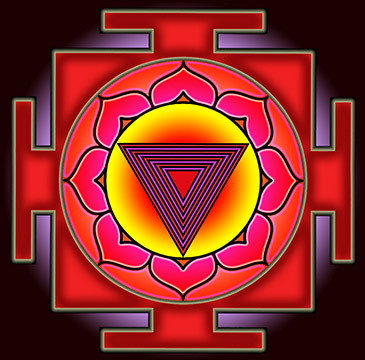
Yantras are ancient Tantric mystical diagrams created to represent various deities or cosmic powers. I found them interesting to study and satisfying to draw in a variety of ways. In the center of many of the yantras I explored, I encountered… triangles.

Tripura-bhairavi_yantra_color
TRIPURABHAIRAVA YANTRA – Public Domain

At first I thought it was love at first sight.

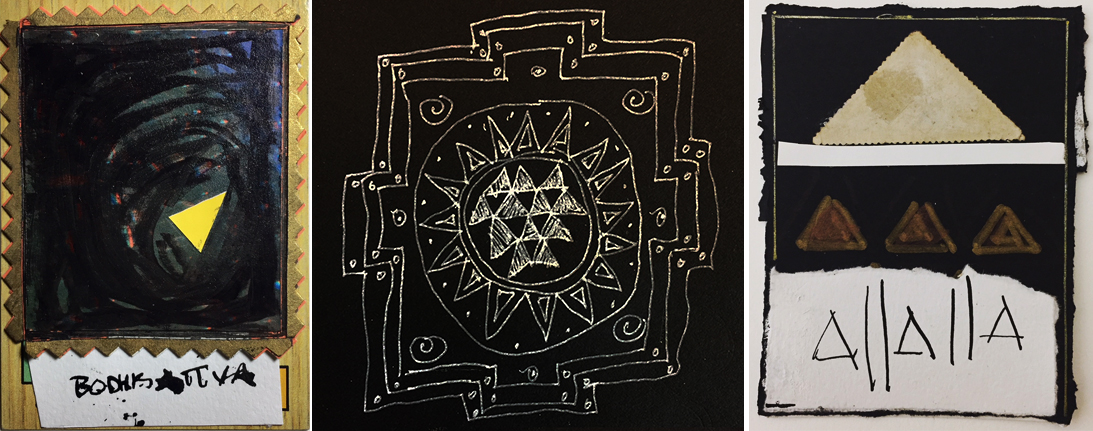
Triptych
© keven lock

But then I realized that triangles had been in my life all along…..

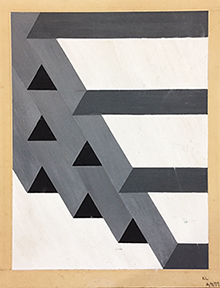
COLOR THEORY TRIANGLES
COLOR THEORY CLASS PROJECT – 1977

There many ideas about what triangles symbolize…

                             Small Blog Icon

Triangle: A polygon having three sides.

TRI
40″ x 30″ ACRYLIC/MIXED MEDIA ON CANVAS

Cool.

Thanks for looking in!
Kev
The Rain

RAINFIRE sized
Oil Pastel On Paper

SO GENTLE A THING

So gentle a thing, the rain,

yet quenches the fire’s thirst.

The eternal cycle

of birth and desolution,

and earth the grave,

and the womb.

Oh Mighty Gods,

we are but ants

beneath the toes

of Brahman.

Cataract
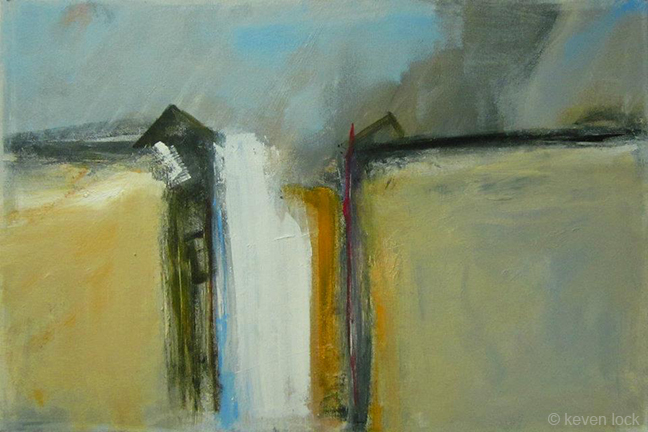
CATARACT – Oil on Canvas – 2011

My mind has been much on the fires here in the PNW.
Thanks for stopping by.

Kev

Art As Yoga

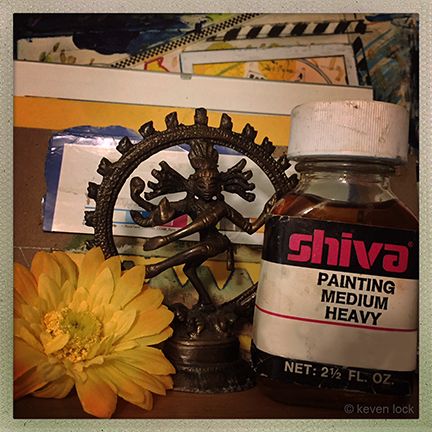
SHIVA MEDIUM RETOUCHED Sized

“Spirituality is often a wordless, silent subject and art is a trustworthy passport to this still place.” – Michael A. Franklin – Artist and Teacher, Naropa University

Yogas, the Vedas tell us, are mental, physical, and spiritual practices. They were brought to light thousands of years ago by seers from the ancient Indian subcontinent.  Yogas are aimed at achieving a clearer perception of reality and uniting the human spirit with the Divine.

There are many, many different schools and approaches to yoga. The Bhagavad Gita alludes to three: Karma yoga (action), Bhakti yoga (devotion), and Jnana yoga (knowledge).

Reflecting on my own journey of combining my art making and my spiritual practice, I feel the most in common with Jnana yoga. The practice of Jnana yoga seeks the union of the Self (Atman) and Ultimate Reality (Brahman) through knowledge.

My practice encourages me to study and seek inspiration from various visual manifestations of the Divine including yantras (Tantric mystical diagrams) and Tantric paintings, such as the small, exquisite abstracts from Rajasthan.

Yantra - Tantra

Also, in the Yoga Sutras, the sage Patanjali presents yoga as the suppression of the active mind.  For me, this means getting out of my own way to allow myself to create an energetic and unrestrained arena of art making where I experience a liberating alternate consciousness and sense of union.

Since beginning to work in these modes, my experience of art making is more productive, more satisfying and more grounded. It has also led me to evolve a more original and (to me) meaningful vocabulary and has intensified my commitment to my spiritual journey.

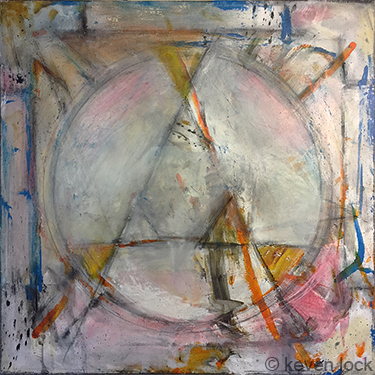
Tri 7
24″ x  24″ Mixed Media on Canvas 

Thanks for stopping by! Please post your thoughts!

Kev

Mysticism???

Svaha                 Svāhā (Oblation) – Mixed Media on Paper

Mysticism??? My best friend called me a mystic just a while back. Wouldn’t it be pretty to think so…

Mysticism is now on the list of things I thought I knew a little something about until I dug  deeper.

“Mysticism,” like “Hindu” and “Religion,” can be a difficult label to get a handle on. Especially if, like me, you are constantly in the position of translating between East and West.

Digging in, I found a great article by an American Catholic priest, Father Thomas Edward Dubay, describing the differences between Hindu, Buddhist, and Christian mysticism. I also read various discussions of the nature of Hindu mysticism, and descriptions of Christian mysticism’s origins, as well as writings decrying mysticism as anti-Christian. From there I moved on to to secular mysticism.

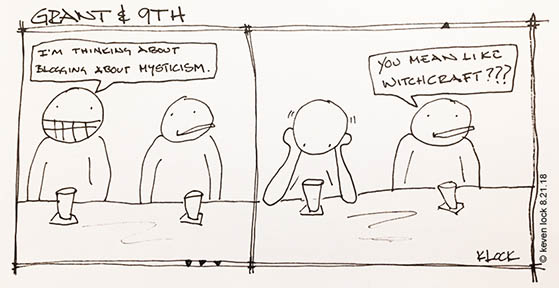
Mysticism Cartoon sized

and from there I moved on to, yup, the occult.

A mare’s nest of multiple ideas! I also found this in an article by the awesome Richard Rohr:

“do not let the word “mystic” scare you off. It simply means one who has moved from mere belief systems or belonging systems to actual inner experience.”

That’s useful.

And, always endeavoring to connect my own spiritual and my artistic dots, I read a fascinating New York Times review from 1986 of a show at the Los Angeles County Museum of Art: “The Spiritual in Art: Abstract Painting 1890-1985’’.  In the review the show’s curator, Maurice Tuchman, is quoted as defining mysticism as the:

“search for the state of oneness with ultimate reality’’

Ok. I’ve been doing that since about the third grade….

I’m just back from working on a project that took me away from my studio for a month or so and I’ve been finding it challenging to reengage with my art. All I’ve been motivated to draw are the simplest triangles. Today, while drawing and contemplating (another word with a thousand shades of meaning, apparently)  I realized that it’s not so much about what I paint or draw, it’s about how I choose to experience the doing of it. 

Bede Griffiths, aka Swami Dayananda (Benedictine monk and noted yogi), reflecting on mystical experience wrote:

“Anything which breaks through the routine of daily life may be the bearer of this message to the soul.”

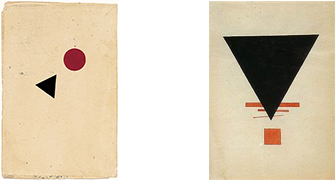
Tantric Triangle plus
Tantric Painting – Anon          Suprematism – Ilya Chashnik
Jaipur, India.                             Russia – 1920

I’m inspired by mystical thinking. I can cop to that. Even while drawing simple triangles. 

Thanks for looking in!
Kev
A thorough discussion of mysticism is way beyond the scope of my blog. The subject deserves and is served by a lot of books! The one I’m currently reading is Mystics – The Soul’s Journey Through Truth by Andrew Harvey. I haven’t finished it yet but it’s looking good so far.
Also, here is a list of the sources I have quoted from above. There are some great ideas here. Take a look at them!
SOURCES:

What’s the Difference between Christian Mysticism, Buddhism and Hinduism?https://catholic-link.org/quotes/whats-the-difference-between-christian-mysticism-buddhism-and-hinduism-quote/ttps://catholic-link.org/quotes/whats-the-difference-between-christian-mysticism-buddhism-and-hinduism-quote/

Mysticism In Religion: Three Ways to View the Sunset   https://www.huffingtonpost.com/fr-richard-rohr/three-ways-to-view-the-su_b_822092.html?ncid=engmodushpmg00000006

ART VIEW; HOW THE SPIRITUAL INFUSED THE ABSTRACT  https://www.nytimes.com/1986/12/21/arts/art-view-how-the-spiritual-infused-the-abstract.html

Moments of Grace: Lifting the Veil  https://yogainternational.com/article/view/moments-of-grace-lifting-the-veil

Rishis Sized
Rishis – Mixed Media on Paper

Morning Shadows

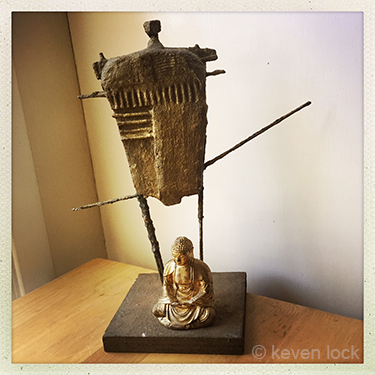
Balance
BALANCE – STANDING FIGURE – Mixed Media – 12.5″ High
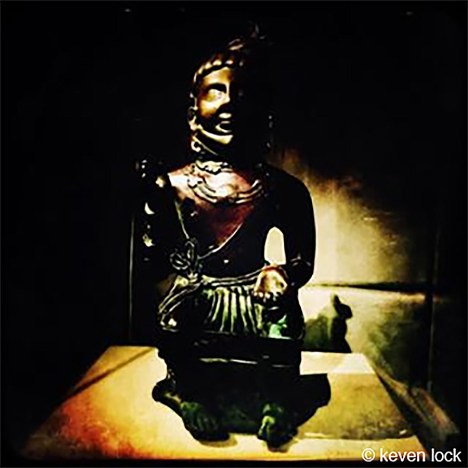
                                                      (Photographed with Buddha)


SOME MORNINGS

Some mornings I awaken,
half awaken,
to shadows on the wall,
to half seen silhouettes,
or to the morning music
of sunlight through blinds.

There is a word
for that golden time
on the threshold of consciousness,
Hypnagogia,

and a lot of science
explaining why.

I am inspired
by shadows on the wall
half seen silhouettes
or the morning music
of sunlight through blinds.

Tri 7
24″ x 24″ – Mixed Media on Canvas – Keven Lock

A few weeks back, at the end of a dream I was dreaming, a voice from nowhere in particular said:  “I am that which sees what is seen.”

What is that which sees what is seen?

Our brain (whatever that is) “seeing” signals converted by our retinas?

Atman, our luminous, eternal self?

Must one preclude the other? 

I’m bored with the argument.

“Imagination is more important than knowledge. Knowledge is limited. Imagination encircles the world.” –  Albert Einstein “The Saturday Evening Post” interview, 1929.

I dig science.  And Maya and the Dreamtime too. I think a lot about my creative goals and what I want to say. And, also, at times, I make art out of shadows on the wall, half seen silhouettes, or the morning music of sunlight passing through the blinds. 

Blind 2

I’m just reentering my own creative life after a very satisfying month spent art directing a feature film on the East Coast. 

Thanks for looking in! – Kev

Stop and Smell the Flowers or Explaining Modern Art to my Mom

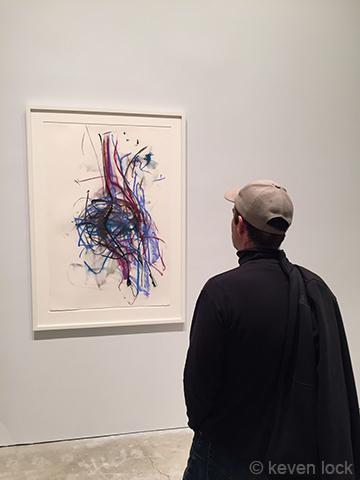
James and Mitchell
James enjoying a Joan Mitchell Pastel Drawing

I love Modern Art.

Motherwell, Dekooning, Mitchell, Newman. Heroes!  They’re my jam!

Do I understand it? Yeah, somewhat. But understanding is not where most of the enjoyment lies for me. I like the attraction I feel to the something unknown. I approach Modern Art in much the same way I try to approach life, by appreciating it while striving to make it less about understanding and more about enjoying the mystery.

Many wonderful works of Western art have dandy literal narratives just waiting to be understood by the viewer, but that’s not the art I’m most drawn to and that’s not the sort of art I make. I love Modern Art (1860ish – 1970ish) and especially Abstract Expressionism and Non-objective Art.  And the art I make is, in part, inspired by Modernism.

But what does all that Modern Art mean?

Pollock supposedly said something about his own work along the lines of:

“It’s like looking at a bed of flowers, you don’t tear your hair out over what it means”.

I’ve always found that sentiment useful.

I get that some viewers are frustrated by Modern Art. To want to understand art is natural and a lot of Modern Art is challenging with that goal in view. To be totally bewildered by some of the art that winds up in museums is quite understandable. Understanding Modern Art (or any art) can take a bit of work.  It takes learning some context.

Newman-Onement_1.jpg
Onement 1, 1948, by Barnett Newman.
Metropolitan Museum of Art – fair use

OR:

Say you’ve just encountered a particularly difficult piece of art on the wall of some world class museum. My invitation is to consider art as the story of humankind’s continuing attempt to explain ourselves to ourselves. In this context, each piece of art might be just a sentence, a word, or even just a letter on a page of that story.  When you encounter a piece of art that you find perplexing or not implicitly beautiful, remember that it still may be important.  Maybe even explore why.

I don’t necessarily try to understand Modern Art myself, I just try to understand my relationship with it.

I don’t attempt to understand God and the universe either, just my relationship with God and the universe.                                  

In my practice, I often reflect on the Nasadiya Sukta.  It’s one of my favorite verses in the Rig Veda (10:129). The last two stanzas as translated by Wendy Doniger O’Flaherty read:

Who really knows? Who will here proclaim it? Whence was it produced?
Whence is this creation? The gods came afterwards, with the creation of
this universe. Who then knows whence it has arisen?

Whence this creation has arisen – perhaps it formed itself, or perhaps it did
not – the one who looks down on it, in the highest heaven, only he knows –
or perhaps he does not know.

It soothingly reminds me to be comfortable with non-understanding.

So, when confronted by some work that seems totally inscrutable, try looking for the mystery in it.  Sink back into that and just float for a while.

Smell the flowers… Count your breaths… Relax……..

Beast Angel
Beast/Angel – Keven Lock – Acrylic on Wood Panel

Thanks for stopping by!
Kev

Homa – Making an offering to a ritual fire.


Met AgnI
Agni (The God of Fire)  –  Bronze – Metropolitan Museum of Art

Agni – Sanskrit: अग्नि – Vedic deity.  Also: Fire – In ritual and practice, Agni is the messenger who conveys offerings to the Universe. Agni is fire, lightning, and sun. Though of ancient origin, Agni, and his wife Svāhā, are still venerated and invoked at Hindu births, weddings and funerals.

“I adore the Flame, the vicar, the divine Rtvik* of the Sacrifice, the summoner who most founds the ecstasy.” –  Rig Veda 1.1.1 (1st verse of the Hymn to Agni) translation by Sri Aurobindo    

*priest

In my practice, I find it useful, comforting and inspiring to venerate and contemplate Agni.

Two Rishis

                                                             Two Rishis – From my sketchbook

HOMA

Agni,

Oh, mouth of the gods.

Vedic fire.

Triangle of flame.

Receiver. Conveyer. Transformer.

Divine messenger. Divine energy.

Agni, that/who swiftly bears

all to Mahadev.


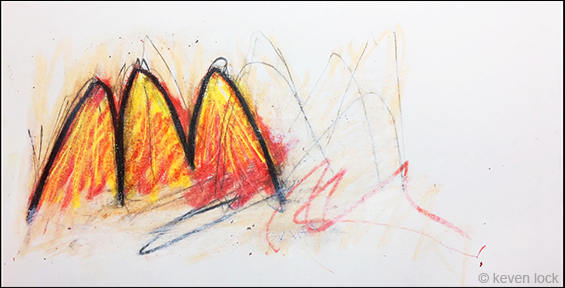
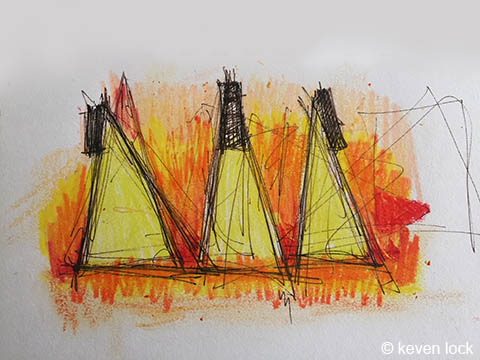
Three Triangles Sized

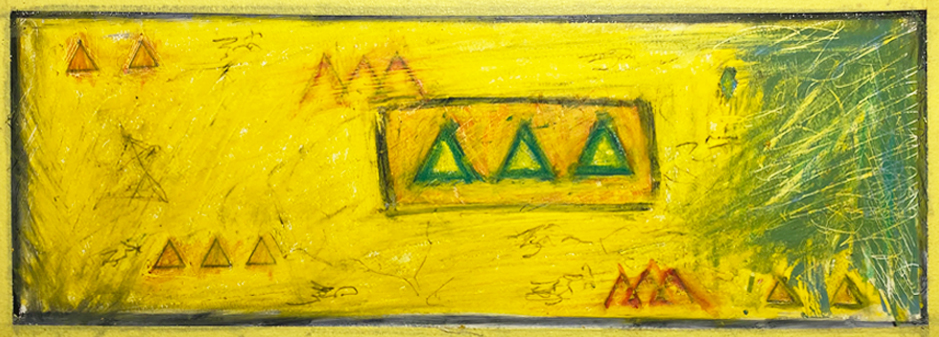
                                                             Three Triangles – Oil Pastel on Paper

Thanks for looking in! – Kev